Fingerprint Records
Reading a fingerprint like a record, and playing it.
- Medium
- AV
- Role
- Research + Concept
- Context
- Major Studio IParsons, Fall 2026
- Tools
- TouchDesignerTrackpadOSC
- Status
- In development
01Overview
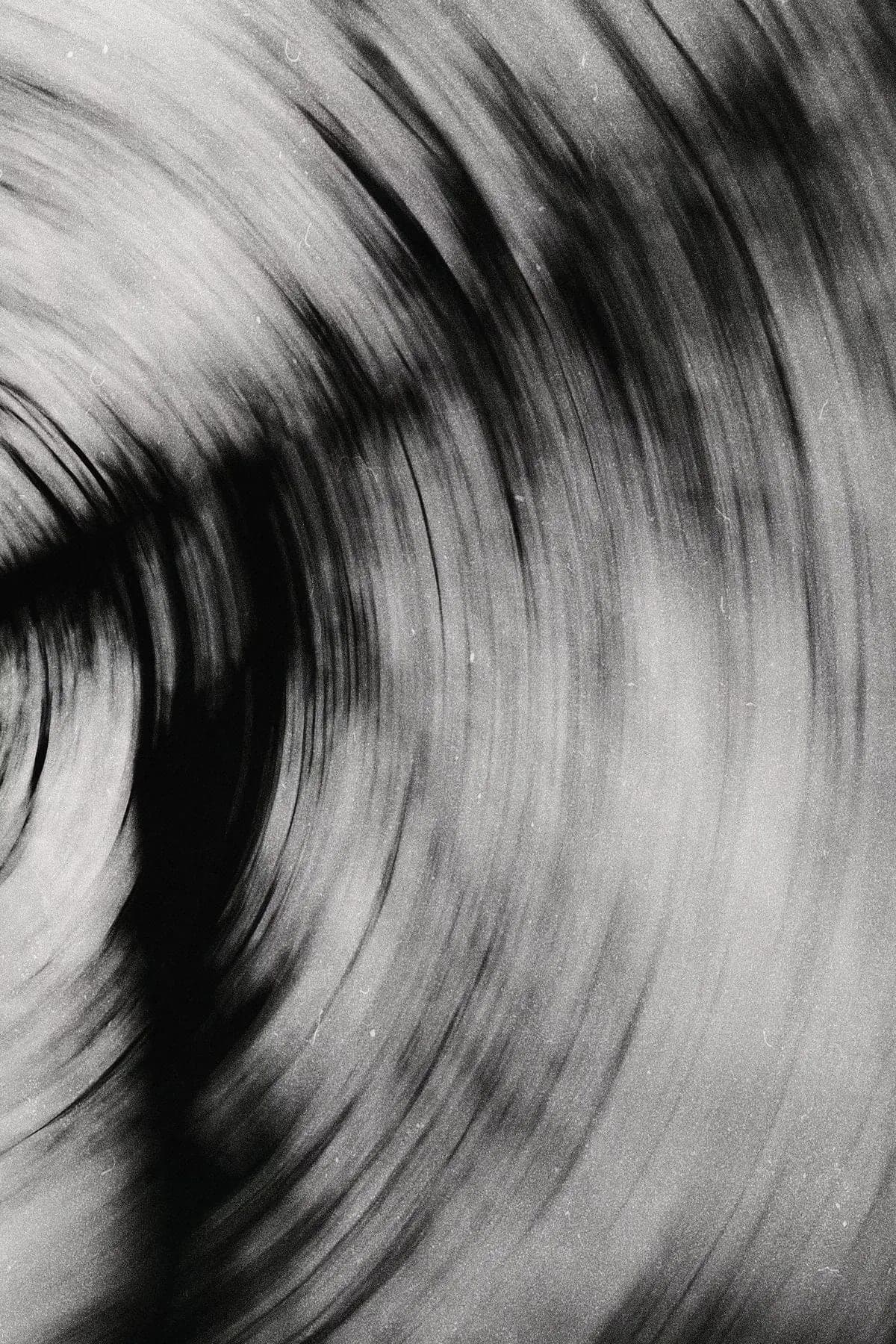
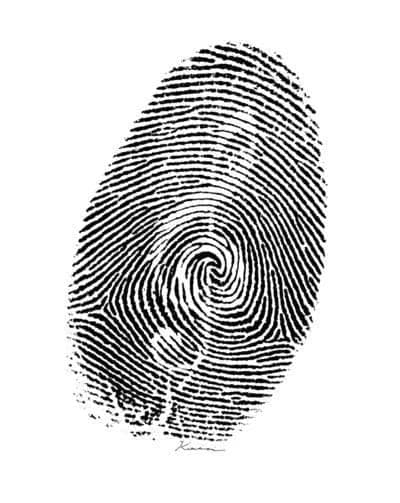
We affect each other in ways we never see: how we move through a room, the warmth we leave behind, the small imperfections in how we speak. Three directions came out of that; the project has narrowed to one: a fingerprint, read like a record and played. Working title: Everything is a Record.
01.1color of your wind — space
Every person makes a current as they move. What does yours look like when it meets someone else’s?
In a crowded city we pass through each other all day without noticing. This makes that pushing, yielding and merging visible.
forms
A — live installation (TouchDesigner): a camera reads optical flow and turns each person’s movement into a coloured current. When two people pass, their currents collide and blend.
B — wind portraits: one space recorded for an hour and compressed into a single long-exposure print.
references
Rafael Lozano-Hemmer, Pulse Room (2006): heartbeats become flashing bulbs — something inside the body made into shared light.
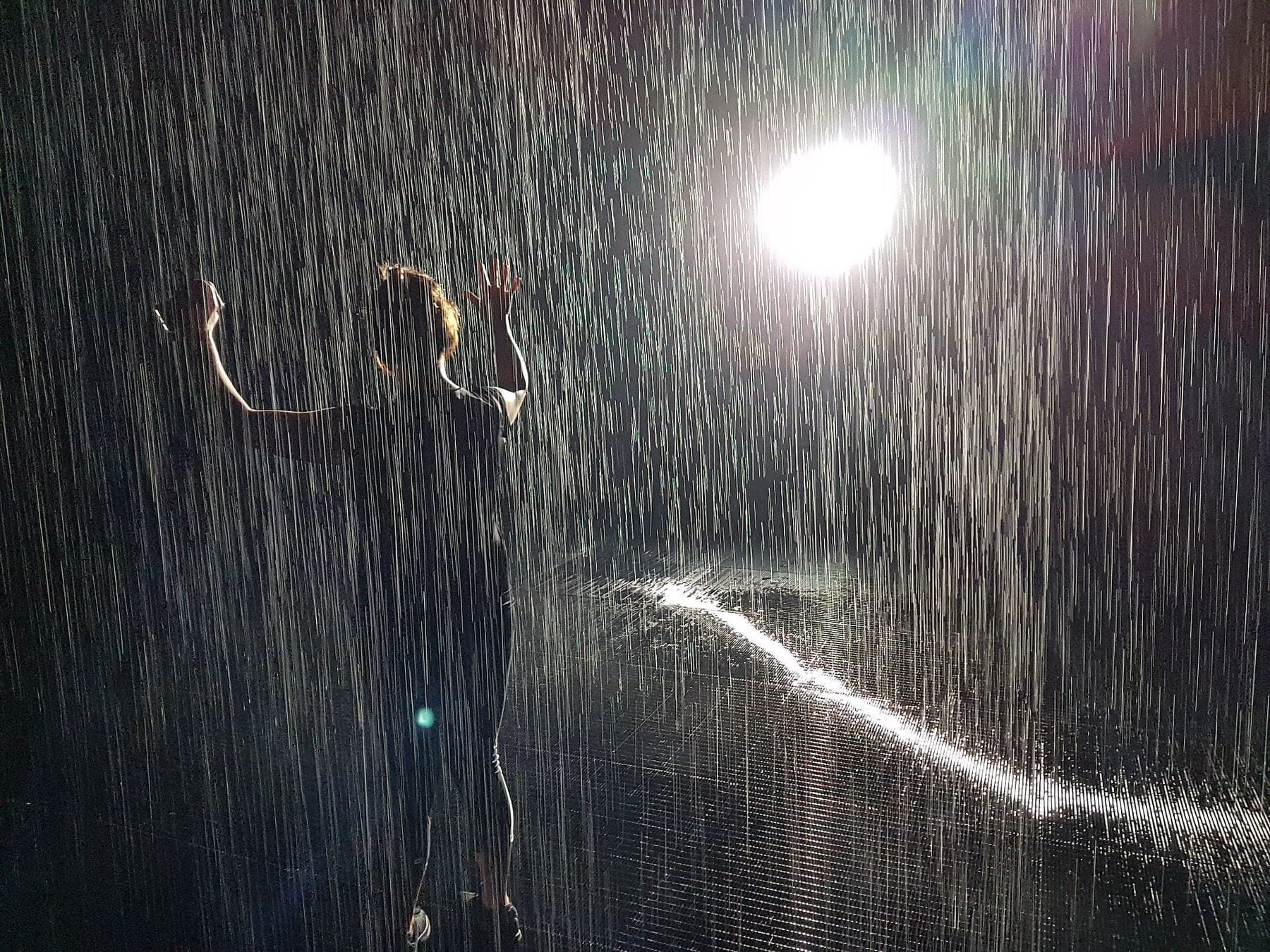
Random International, Rain Room (2012): the rain stops wherever a body is, so presence changes the room.
teamLab, Flowers and People (2013–): a digital garden that blooms or wilts with how people move and gather.
01.2afterwarmth — time
We leave warmth on every seat, rail and handle. What if you could see who was here before you?
Public objects hold the traces of thousands of strangers yet feel anonymous. Showing the heat they leave makes them, briefly, intimate.
forms
A — thermal camera: a bench filmed in thermal; handprints and seat marks glow on a projection, then fade.
B — object: a bench coated in thermochromic paint that changes colour where it’s touched, for as long as the warmth lasts.
references
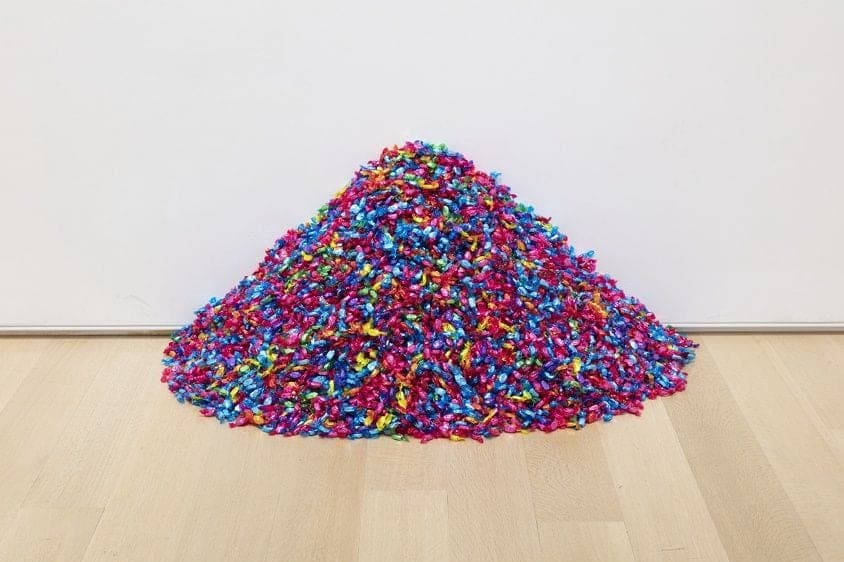
Felix Gonzalez-Torres, Untitled (Portrait of Ross in L.A.) (1991): a pile of candy at his partner’s ideal body weight, taken away piece by piece. Presence through absence.
Rafael Lozano-Hemmer, Pulse Room (2006): each new heartbeat pushes the earlier ones down the row until the oldest drops off — the room holds whoever came before you.
Rachel Whiteread, House (1993): a concrete cast of a house’s interior — lived-in space made solid.
01.3redline — machine
When AI corrects how we write, what gets lost — and what refuses to be corrected?
AI smooths out hesitations, odd word choices and mistakes, which is often where we are most human. Redline turns its edits into a mirror of what’s ours.
forms
A — web piece: write something personal, AI marks it up in red, and you accept or refuse each edit. The work is what you refused.
B — publication: original text and AI edits side by side, with the red marks as the visual language.
references
Sougwen Chung, Drawing Operations (2015–): drawing alongside a robot that learns her gestures — where the human mark ends and the machine’s begins.
Lauren Lee McCarthy, LAUREN (2017): the artist as a human smart-home assistant, showing what is lost when care is automated.
Ross Goodwin, 1 the Road (2018): a novel written by AI on a road trip, its broken sentences asking what authorship is.
01.4fingerprint records — direction and reflection
Working title: Everything is a Record.
The three directions narrowed to one: read a fingerprint the way a needle reads a record, and play it. No two prints are alike, so no two records sound alike.
capture
Under test: ink on paper, photographed; a fingerprint scanner; a camera thresholded live in TouchDesigner; a trackpad read through TrackpadOSC. The aim is live and safe — nothing stored, nothing identifiable.
open questions
Keeping the connection between a print and its sound legible. Five fingers as five instruments; two hands, one input; pressure and vibration as other ways in.
what changed
Feedback from Xin Xin and Thiago, pushed my work into a direction that I previously was not thinking of.
post-crit direction
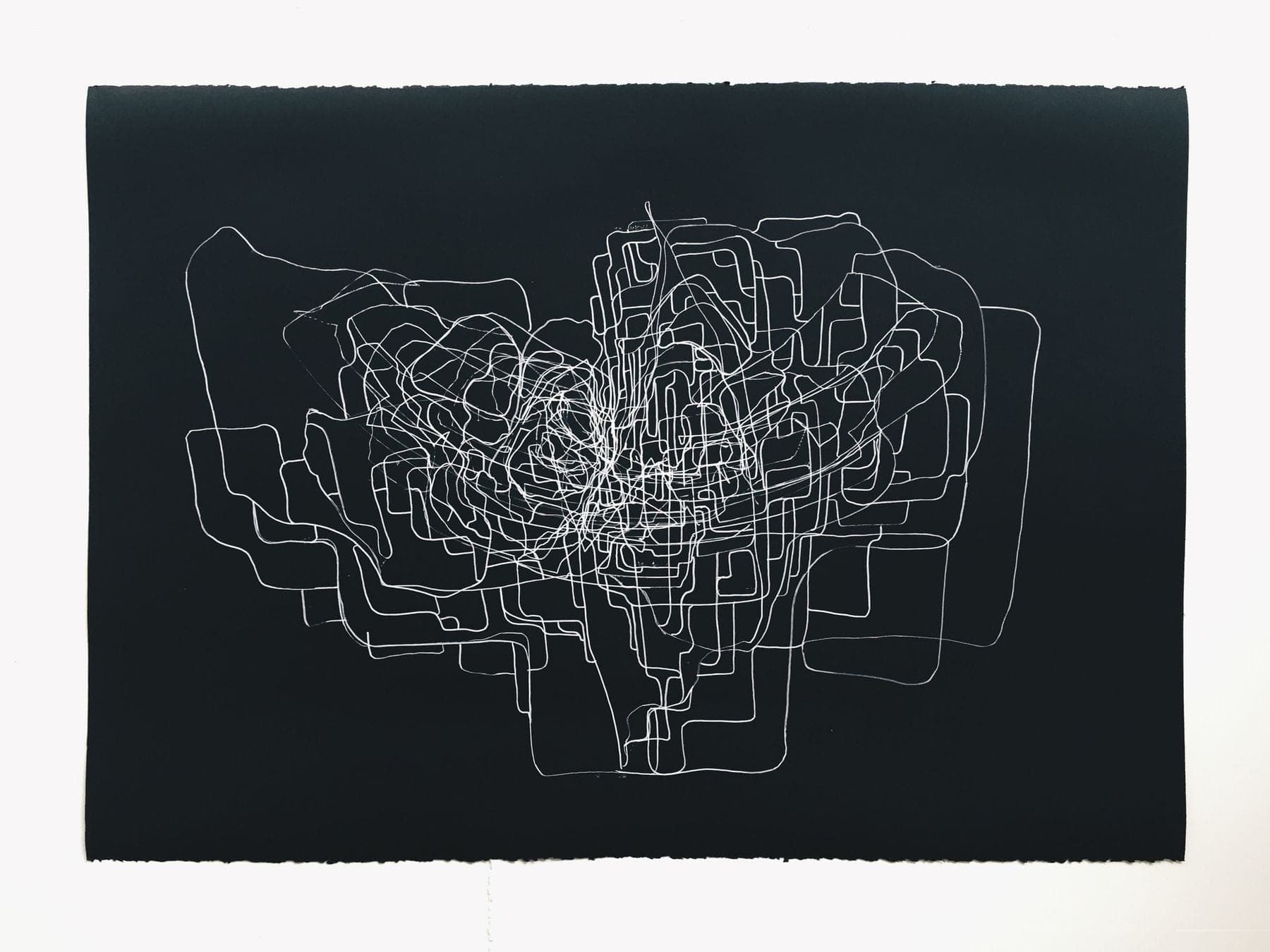
Read the print along a spiral, from the core outward, the way a stylus moves through a groove: one continuous signal, played and drawn at the same moment. It starts as a screen piece, and may become physical — a sand table where a steel ball carves each print as a groove, and the next visitor's print erases the last.
01Overview
01Overview
We affect each other in ways we never see: how we move through a room, the warmth we leave behind, the small imperfections in how we speak. Three directions came out of that; the project has narrowed to one: a fingerprint, read like a record and played. Working title: Everything is a Record.
01.1color of your wind — space
01.1color of your wind — space
Every person makes a current as they move. What does yours look like when it meets someone else’s?
In a crowded city we pass through each other all day without noticing. This makes that pushing, yielding and merging visible.
forms
A — live installation (TouchDesigner): a camera reads optical flow and turns each person’s movement into a coloured current. When two people pass, their currents collide and blend.
B — wind portraits: one space recorded for an hour and compressed into a single long-exposure print.
references
Rafael Lozano-Hemmer, Pulse Room (2006): heartbeats become flashing bulbs — something inside the body made into shared light.
Random International, Rain Room (2012): the rain stops wherever a body is, so presence changes the room.
teamLab, Flowers and People (2013–): a digital garden that blooms or wilts with how people move and gather.
01.2afterwarmth — time
01.2afterwarmth — time
We leave warmth on every seat, rail and handle. What if you could see who was here before you?
Public objects hold the traces of thousands of strangers yet feel anonymous. Showing the heat they leave makes them, briefly, intimate.
forms
A — thermal camera: a bench filmed in thermal; handprints and seat marks glow on a projection, then fade.
B — object: a bench coated in thermochromic paint that changes colour where it’s touched, for as long as the warmth lasts.
references
Felix Gonzalez-Torres, Untitled (Portrait of Ross in L.A.) (1991): a pile of candy at his partner’s ideal body weight, taken away piece by piece. Presence through absence.
Rafael Lozano-Hemmer, Pulse Room (2006): each new heartbeat pushes the earlier ones down the row until the oldest drops off — the room holds whoever came before you.
Rachel Whiteread, House (1993): a concrete cast of a house’s interior — lived-in space made solid.
01.3redline — machine
01.3redline — machine
When AI corrects how we write, what gets lost — and what refuses to be corrected?
AI smooths out hesitations, odd word choices and mistakes, which is often where we are most human. Redline turns its edits into a mirror of what’s ours.
forms
A — web piece: write something personal, AI marks it up in red, and you accept or refuse each edit. The work is what you refused.
B — publication: original text and AI edits side by side, with the red marks as the visual language.
references
Sougwen Chung, Drawing Operations (2015–): drawing alongside a robot that learns her gestures — where the human mark ends and the machine’s begins.
Lauren Lee McCarthy, LAUREN (2017): the artist as a human smart-home assistant, showing what is lost when care is automated.
Ross Goodwin, 1 the Road (2018): a novel written by AI on a road trip, its broken sentences asking what authorship is.
01.4fingerprint records — direction and reflection
01.4fingerprint records — direction and reflection
Working title: Everything is a Record.
The three directions narrowed to one: read a fingerprint the way a needle reads a record, and play it. No two prints are alike, so no two records sound alike.
capture
Under test: ink on paper, photographed; a fingerprint scanner; a camera thresholded live in TouchDesigner; a trackpad read through TrackpadOSC. The aim is live and safe — nothing stored, nothing identifiable.
open questions
Keeping the connection between a print and its sound legible. Five fingers as five instruments; two hands, one input; pressure and vibration as other ways in.
what changed
Feedback from Xin Xin and Thiago, pushed my work into a direction that I previously was not thinking of.
post-crit direction
Read the print along a spiral, from the core outward, the way a stylus moves through a groove: one continuous signal, played and drawn at the same moment. It starts as a screen piece, and may become physical — a sand table where a steel ball carves each print as a groove, and the next visitor's print erases the last.
Next — Words to the World